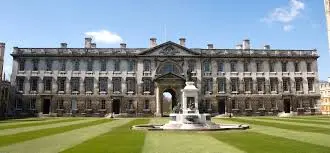
Lancaster University Founding and Historical Background
The origins of Lancaster University date back to 1947, when a public meeting in Lancaster formally supported the idea of establishing a university in the city. Although the proposal initially remained inactive, it was revived in early 1961 by Lancashire County Council. To take the initiative forward, the Council formed a Promotion Committee for a University in North-West Lancashire, chaired by Lord Derby. This committee later submitted a formal proposal to the University Grants Committee, paving the way for the university’s establishment.
About Lancaster University
From the moment it welcomed its first students, Lancaster University was granted full authority to govern its academic and administrative affairs under the provisions of its Royal Charter and Statutes. The university’s development reflects a rich academic heritage, tracing its evolution from a greenfield site and early city-based locations to a thriving modern campus. The early years, particularly during the “swinging sixties” and early 1970s, marked a formative period in shaping Lancaster’s academic culture and student life.
Lancaster University- Table of Contents
Collegiate System and Student Support
Accreditations and Global Presence

Campus and Location
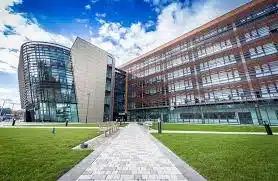
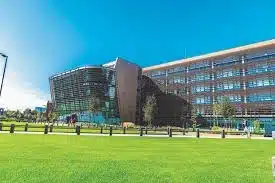
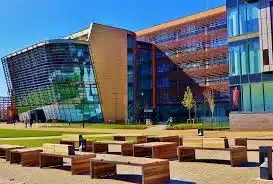
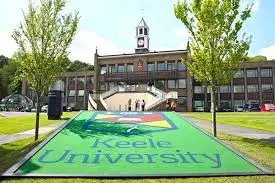
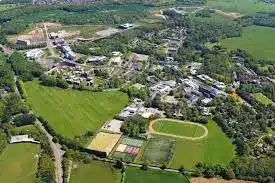
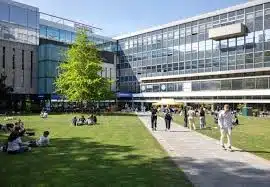
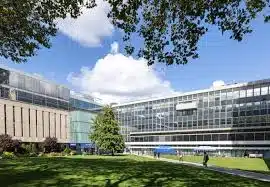
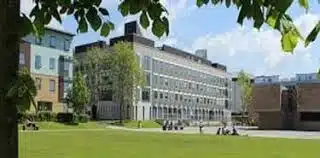
Lancaster University is situated on a picturesque 578-acre parkland campus at Bailrigg, located just three miles from Lancaster city centre. The Bailrigg campus is open and welcoming, offering members of the local community access to a wide range of facilities, events, and green spaces. Its unique setting combines a peaceful natural environment with easy access to urban amenities.
Collegiate System and Student Support
A defining feature of Lancaster University is its distinctive collegiate system. Each college is an inclusive and diverse community that provides facilities, services, and a strong sense of belonging. Colleges play a central role in student life, often becoming the place where lifelong friendships are formed. It is common for Lancaster graduates to ask one another which college they belonged to even before discussing their academic discipline.
From the first day of arrival until graduation, students remain part of their college community. Colleges also serve as the first point of contact for pastoral and welfare support, with dedicated staff available around the clock to offer guidance, assistance, or urgent help when needed. Wherever life may take graduates after leaving Lancaster, their college remains a lasting part of their identity.
Lancaster University Accreditations and Global Presence
Lancaster University Ghana (LUG), an international branch campus, has received institutional re-accreditation from the National Accreditation Board (NAB) of Ghana for a further five-year term. This accreditation, effective retrospectively from 1 September 2016 to 31 August 2021, confirms LUG’s compliance with national quality assurance standards and best practices in tertiary education delivery.
As part of the accreditation process, NAB inspection teams evaluated the university’s facilities, academic programmes, course materials, faculty, and administrative systems. Lancaster University Ghana, now in its third year of operation, offers a range of programmes including a Foundation Programme, undergraduate degrees in Accounting and Finance, Business Studies, Computer Studies, Economics and International Relations, Law, Marketing, Politics and International Relations, Psychology, as well as the Lancaster Executive MBA.
Lancaster University Rankings and Reputation
Lancaster University is widely recognized as a highly ranked global institution. It is placed within the top 10 universities in the UK according to The Complete University Guide 2026 and consistently ranks within the top 15 across major UK league tables. Internationally, Lancaster also performs strongly in global rankings such as the QS World University Rankings.
The university’s commitment to academic excellence is reflected in the 2025 National Student Survey results. Lancaster was ranked among the UK’s top ten universities for the quality of its learning resources, with an impressive satisfaction score of 91.6%. Academic support also received strong student approval at 90.2%, while the university achieved 6th place nationally for library resources, recording an outstanding satisfaction rate of 93.9%.
Latest Notifications:
Courses Offered and Duration & Cost of Study in Lancaster University
Artificial Intelligence
Course Details
Study Mode: Full Time
- Duration: 1 year full time, tuition fee: 30,000 GBP, Course starts in September.
Entry Requirements
Eligibility Criteria
- A 2:2 Honours degree (UK or equivalent) in any discipline
Applicants should have:
- Some experience in programming
- Prior exposure to quantitative methods, such as:
- Statistics
- Mathematical modelling
English Language Requirements
- IELTS (Academic) with:
- Overall score: minimum 6.5
- Each component (Listening, Reading, Writing, Speaking): minimum 6.0
Advanced Mechanical Engineering
Course Details
Study Mode: full-time/part-time
- Duration: 1 year full time, tuition fee: 30,000 GBP, Course starts in September.
- Duration: 2 years part time, tuition fee: 15,000 GBP, Course starts in September.
Entry Requirements
- A 2:2 Honours degree (UK or equivalent) in:
- Mechanical Engineering, or
- Related disciplines, or
- Physics
English Language Requirements
- Overall score: minimum 6.5
- Minimum 6.0 in each component (Listening, Reading, Writing, and Speaking)
Business Analytics
Course Details
Study Mode: Full Time / Part Time
- Duration: 1 year full time, tuition fee: 30,000 GBP, Course starts in September.
Entry Requirements
- A 2:2 Honours degree (UK or equivalent)
- The university considers a wide range of degree backgrounds, including:
- Business, Economics, Engineering, Statistics, Mathematics
- Psychology, Geography, Sociology
Applicants must have prior exposure to quantitative methods, such as:
- Mathematics, Statistics, Probability, Econometrics, Game theory
- Data analysis, Operations research, Simulation, Business modelling
- Academic performance should be consistently at 2:2 level throughout undergraduate studies
English Language Requirements
- IELTS (Academic) with: Overall score: minimum 6.5
- Minimum 6.0 in each component (Listening, Reading, Writing, Speaking)
Computer Science
Course Details
Study Mode: Full Time / Part Time
- Duration: 3 To 4 years full time, Course starts in September.
- Duration: 4 To 7 years part time, Course starts in September.
Entry Requirements
- 2:1 Hons degree (UK or equivalent) in computer science, or its equivalent, in an engineering or associated discipline.
- Applicants required an IELTS (Academic) Test with an overall score of at least 6.5, and a minimum of 6.0 in each element of the test.
Cyber Security
Course Details
Study Mode: Full Time / Part Time
- Duration: 1 year Full Time, tuition fee: 30,000 GBP, Course starts in September.
Entry Requirements
Eligibility Criteria
- A 2:2 Honours degree (UK or equivalent) in:
- Computer Science, Mathematics, Statistics, Engineering, Physics
- Applicants should have foundational knowledge of core computer science areas, including:
- Programming, Networking, Operating systems
- Applicants with equivalent professional experience are encouraged to:
- IELTS (Academic) with Overall score: minimum 6.5
- Minimum 6.0 in each component (Listening, Reading, Writing, Speaking)
Data Science
Course Details
Study Mode: Full Time / Part Time
- Duration: 1 year Full Time, tuition fee: 30,000 GBP, Course starts in September.
- Duration: 2 To 3 years Part Time, tuition fee: 15,000 GBP, Course starts in September.
Entry Requirements
- A 2:2 Honours degree (UK or equivalent) in any discipline
- Applicants must have prior exposure to quantitative methods, such as:
- Statistics, Mathematical modelling
- IELTS (Academic) with: Overall score: minimum 6.5
- Minimum 6.0 in each component (Listening, Reading, Writing, Speaking)
Digital and Social Media Marketing
Course Details
Study Mode: Full Time / Part Time
- Duration: 1 year full time, tuition fee: 30,000 GBP, Course starts in September.
Entry Requirements
- A 2:2 Honours degree (UK or equivalent) in any subject discipline
- Academic performance must beConsistently at 2:2 level or higher throughout undergraduate studies
- IELTS (Academic) with: Overall score: minimum 6.5
- Minimum 6.0 in each component (Listening, Reading, Writing, Speaking)
Electronic and Electrical Engineering
Course Details
Study Mode: Full Time / Part Time
- Duration: 1 year full time, tuition fee: 30,000 GBP, Course starts in September.
Entry Requirements
- A 2:2 Honours degree (UK or equivalent) in a related engineering discipline with substantial coverage of:
- Digital electronics, Analogue electronics
- Communications, Electrical engineering, Computer systems, Physics
- IELTS (Academic) with: Overall score: minimum 6.5
- Minimum 6.0 in each component (Listening, Reading, Writing, Speaking)
Information Systems and Digital Business Innovation
Course Details
Study Mode: Full Time / Part Time
- Duration: 1 year full time, tuition fee: 28,000 GBP, Course starts in September.
Entry Requirements
- A 2:2 Honours degree (UK or equivalent) in any discipline
- International applicants are advised to:
- Check the university’s list of recognized international qualifications before applying
- IELTS (Academic) with: Overall score: minimum 6.5
- Minimum 6.0 in each component (Listening, Reading, Writing, Speaking)
Master of Business Administration: MBA
Course Details
Study Mode: Full Time / Part Time
- Duration: 1 year full time, tuition fee: 33,000 GBP, Course starts in September.
Entry Requirements
- 2:2 Hons degree (UK or equivalent) in any subject.
- IELTS (Academic) with: Overall score: minimum 6.5
- Minimum 6.0 in each component (Listening, Reading, Writing, Speaking)
List of Other Courses in Lancaster University
- Applied Mathematics
- Biological Science
- Financial Management
- Human Resource Management
- Investment Management and Financial Analysis
- Management Science
Latest Updates:
Facilities And Infrastructure in Lancaster University, Lancaster
Campus Infrastructure
Lancaster University is set on a spacious 578-acre parkland campus at Bailrigg, offering a self-contained academic and residential environment just three miles from Lancaster city centre. The campus integrates teaching, accommodation, research, and leisure facilities within walking distance, creating a vibrant and convenient student experience.
Academic and Teaching Facilities
The university is equipped with modern lecture theatres, seminar rooms, and technologically advanced teaching spaces designed to support innovative learning. Many classrooms feature digital projection systems, lecture capture technology, and collaborative learning tools. Dedicated faculty buildings house specialist teaching areas tailored to disciplines such as science, engineering, management, social sciences, arts, and health-related studies.
Laboratories and Research Facilities
Lancaster University offers state-of-the-art laboratories and research centers supporting cutting-edge research across multiple disciplines. These include advanced computing labs, engineering workshops, environmental science laboratories, psychology labs, and data science facilities. The university is also home to several interdisciplinary research institutes that promote innovation, sustainability, and industry collaboration.
Library and Learning Resources
The Lancaster University Library is a central academic hub, providing extensive print and digital collections, including e-books, journals, databases, and archives. The library offers a variety of study environments such as silent study zones, group discussion rooms, and 24/7 study areas during peak academic periods. Students also benefit from academic skills support, research consultations, and access to high-quality online learning resources.
Student Accommodation
On-campus accommodation is guaranteed for first-year undergraduate students and is provided through the university’s collegiate system. A wide range of housing options is available, including en-suite rooms, standard rooms, studio apartments, and catered residences. All accommodation is located within close proximity to academic buildings, libraries, and social spaces.
IT and Digital Infrastructure
Lancaster University offers robust digital infrastructure, including high-speed campus-wide Wi-Fi, computer clusters, specialist software, and secure online learning platforms. Students have access to virtual learning environments, cloud storage, email services, and IT support to ensure a seamless digital learning experience.
Sports and Fitness Facilities
The university boasts excellent sports and fitness facilities, including a modern sports centre with a fully equipped gym, fitness studios, sports halls, and outdoor pitches. Facilities support a wide range of sports such as football, rugby, cricket, athletics, tennis, and swimming. Lancaster encourages student participation in competitive sports, recreational activities, and fitness programmes.
Health, Wellbeing, and Support Services
Comprehensive health and wellbeing services are available on campus, including a medical centre, counselling services, mental health support, and disability services. Dedicated student support teams provide guidance on academic matters, personal wellbeing, and career development.
Dining, Retail, and Social Spaces
The campus offers a variety of dining options, including cafés, restaurants, food courts, and college bars, catering to diverse dietary needs. Retail facilities include convenience stores, banking services, and essential amenities. Social spaces, common rooms, and event venues contribute to a lively campus community.
Sustainability and Green Spaces
Lancaster University is committed to environmental sustainability and features extensive green spaces, walking paths, and eco-friendly buildings. The campus supports sustainable transport, energy-efficient infrastructure, and initiatives aimed at reducing environmental impact.
Official site For Lancaster University: Click Here
Required Documents For Admission in Lancaster University
As per the university, applicants applying for a master’s programme at Lancaster University are required to submit the following documents:
- Completed online application form
- Academic transcripts for all previously completed postgraduate qualifications.
- Degree certificate(s) or provisional certificate (if the final certificate is not yet available)
- Personal statement outlining academic background, motivation for the chosen course, and career goals.
- Curriculum Vitae (CV) or résumé (required for certain programmes).
- Two academic or professional references (as specified by the course).
- Proof of English language proficiency (such as IELTS, TOEFL, or equivalent, if applicable).
- Copy of passport (photo and personal details page).
- Official grading scale or mark scheme (if university uses a non-standard grading system).
- Work experience certificate(s) or employer reference(s), where relevant to the programme.
- Portfolio or writing sample (required for selected courses only)
- Research proposal (mandatory for research-based or MPhil/PhD-related master’s programmes)
Intake For Lancaster University
- Main Intake: September / October — This is the primary and most common intake for Master’s programmes at Lancaster University.
- Additional Intake: January / February — Some programmes may offer a secondary intake in January/February, depending on the course and departmental availability.
Get more details about the colleges in Kyrgyzstan: Click Here
Eligibility Criteria For Admission in Lancaster University
- Undergraduate Degree Requirement:
Students must hold a relevant bachelor’s degree (normally a UK 2:1 honours degree or equivalent) from a recognized university to be eligible for a taught master’s programme. - Lower Second Class Consideration:
Applicants with a 2:2 honours degree (or equivalent) may also be considered if they have relevant professional work experience, either paid or voluntary. - Course-Specific Requirements:
Some master’s programmes may have additional academic requirements, such as specific subject backgrounds, work experience, portfolios, or interviews — depending on the discipline. Always check the specific course page for precise criteria. - English Language Proficiency:
If English is not a first language, students must provide evidence of a recognized English language qualification. Scores vary by course, but common examples include:- IELTS: 6.5 overall with at least 6.0 in each skill
- TOEFL iBT: 93 overall with minimum section scores
- Pearson PTE: 62 overall
- International Qualification Equivalency:
International degrees must be equivalent to the UK undergraduate standard (such as 2:1 or 2:2), and equivalency is assessed based on recognized international qualification frameworks. - Research Master’s Additional Criteria:
If applying for a research-based master’s, there may be additional academic or research experience requirements — including research proposals and potential supervisor approval.
Admission Process For Lancaster University
- Check Requirements First
Before applying, check the entry requirements for a chosen master’s programme, including academic qualifications and English language criteria. - Prepare Supporting Documents
Get ready with all required supporting documents such as academic transcripts, references, personal statement, and English test results (if applicable). - Apply Online
Submit an application through the university’s online application portal (My Applications) for postgraduate study. - Create an Account
If a new applicant, create an account on the Lancaster postgraduate application system. If a student is a Lancaster student, log in using existing credentials. - Complete and Submit Application Form
Select a desired programme and intake (e.g., September). Fill student personal details, academic history, and course choices fully before submission. - Upload Required Documents
Upload scanned copies of all supporting documents specified in the application portal after submitting a form. - Application Review
The Postgraduate Admissions Office reviews student applications for completeness before it is passed to the department for academic consideration. Students may be contacted for clarification or additional information. - Offer Decision
Students will receive either a conditional or unconditional offer. Conditional offers typically require meeting certain academic or English language conditions. - Accept the Offer
If an applicant receives an offer, accept it via the online portal. If required, pay the tuition fee deposit to secure a place, which is later deducted from applicant fees. - Apply for Accommodation and Visa (if applicable)
After acceptance, apply for on-campus accommodation and begin a student visa process (for international students). The university will often provide guidelines and support. - Registration and Enrollment
Once all conditions are met and fees are paid (if required), complete registration and enrolment before the start of a programme. - Start student Studies
Attend orientation, register for classes, and start a student Master’s programme on the scheduled term start date.
Also Check:
Gallery









Map View
De Montfort University Leicester
De Montfort University Leicester Rich historical setting of the campus and