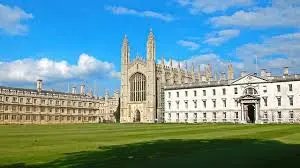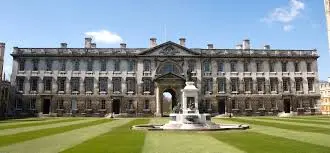
Imperial College London, situated in the heart of London, is a globally top-ranked university that is known for its excellence in science, technology, engineering, medicine, and business (STEMB). Established in 1907 with the mission “To be useful”, Imperial has continued to focus on translating scientific knowledge into practical impact that benefits the global community.
About Imperial College London
At Imperial, understanding the world is the beginning of changing it. Imperial College London employs science and innovation to enhance the understanding of the universe while improving the lives of people around the world. Its research-led approach positions Imperial at the cutting edge of solving some of the most pressing issues of today, such as global health, climate change, artificial intelligence, sustainability, and business leadership.
Imperial College London – Table of Contents
- About
- Accreditations
- Rankings
- Courses Offered
- Other Courses
- Facilities And Infrastructure
- Required Documents
- Intake
- Eligibility Criteria
- Admission Process
Imperial College London’s activities transcend different disciplines. Science at Imperial is a philosophy that is characterized by curiosity, critical thinking, creativity, humility, and the ability to act on ideas. Through strong partnerships with industries, governments, and research organizations around the world, Imperial College London serves as a critical talent pipeline and innovation gateway.
Globally acclaimed for its academic excellence, Imperial College London is ranked among the top universities globally and is proud to be one of the most international institutions, which attracts students, faculty, and staff from all over the world. Its diverse global community works together across borders to address complex and practical problems of the world.

Through the Imperial Global initiative, Imperial College London expands its presence beyond London by developing long-term partnerships in key cities around the world. These global locations enhance partnerships with industry, government, and knowledge organizations, ensuring that Imperial’s scientific research and innovations have a positive impact on a global scale.
From its campuses in London to its global presence, Imperial College London continues to ask challenging questions, expand the frontiers of knowledge, and shape the future—using science not only to understand the world but to change it for the better.
Imperial College London Accreditations
The Imperial Business School has a premier international position, being part of only one percent of the world’s business schools that have gained the ‘triple crown’ accreditation from the two most prominent international accrediting agencies: AACSB (Association to Advance Collegiate Schools of Business), AMBA (Association of MBAs), and EQUIS (European Quality Improvement System). This prestigious award is a testimony to the School’s outstanding performance in terms of teaching, research, and industry interaction.
Apart from its academic accreditation, the Imperial Business School is strongly devoted to equality, diversity, and inclusion. It is one of the first business schools to gain a Bronze Athena SWAN Award at the departmental level from the Equality Challenge Unit. This award is a recognition of the School’s proactive approach towards dealing with gender inequality in higher education institutions and its continuous efforts to create a supportive and inclusive academic environment for its staff and students.
Imperial College London Rankings
The Imperial Business School’s excellence in terms of teaching, research, and industry linkage is also evident in its performance in international rankings. The Imperial Business School has been ranked among the top five business schools in Europe, which not only emphasizes its outstanding reputation for academic excellence, innovative teaching practices, and excellent graduate employability but also positions it as a leader in international business education.
Latest Notifications:
Courses Offered and Duration & Cost of Study in Imperial College London
Advanced Computing
Course Details
Study Mode: Full Time
- Duration: 1 year full time, tuition fee: 46,000 GBP, Course starts in September.
Entry Requirements
- Imperial College London considers IELTS scores to be valid for 2 years.
- IELTS 6.5 overall (minimum 6.0 in all elements 7.0 overall.
- Duolingo 115 overall with no less than 105 in any integrated sub score.
Advanced Mechanical Engineering
Course Details
Study Mode: Full Time
- Duration: 1 year full time, tuition fee: 45,000 GBP, Course starts in September.
- Duration: 2 years part time, tuition fee: 9,700 GBP, Course starts in September.
Entry Requirements
- First-Class Honours in Science or Engineering.
- IELTS 6.5 overall (minimum 6.0 in all elements 7.0 overall.
- Duolingo 115 overall with no less than 105 in any integrated sub score.
Applied Biosciences and Biotechnology
Course Details
Study Mode: Full Time
- Duration: 1 year full time, tuition fee: 40,500 GBP, Course starts in September.
Entry Requirements
Academic Requirement:
- A UK 2:1 (Upper Second Class Honours) degree or equivalent in Biochemistry, Biology, or a closely related subject.
Confirmation for Acceptance of Studies (CAS):
- Imperial College London will issue a CAS (Confirmation for Acceptance of Studies) once all conditions are met.
- The CAS is an electronic document containing a unique reference number required to apply for a UK Student Visa.
- This confirms to UK Visas and Immigration (UKVI) that Imperial is sponsoring student studies in the UK.
English Language Requirements:
- IELTS: Overall score of 6.5 or 7.0, with a minimum of 6.0 in each component.
- Duolingo English Test: Overall score of 115, with no less than 105 in any individual sub-score.
Machine Learning
Course Details
Study Mode: Full Time
- Duration: 1 year full time, tuition fee: 46,000 GBP, Course starts in September.
Entry Requirements
Competitive Entry Standards:
- Due to the highly competitive nature of Imperial College London’s programmes, individual departments, centers, and institutes may set entry requirements higher than the minimum standards listed in the official admissions index.
- In some cases, specific grade averages may be required in addition to the stated degree classification.
English Language Proficiency Requirements:
- IELTS: Overall score of 6.5 or 7.0, with a minimum of 6.0 in each component.
- Duolingo English Test: Overall score of 115, with no less than 105 in any individual sub-score.
- PTE Academic: Overall score of 62, with a minimum of 56 in all elements.
- TOEFL iBT: Overall score of 92, with a minimum of 20 in each section.
Artificial Intelligence
Course Details
Study Mode: full-time
- Duration: 1 year full time, tuition fee: 39,900 GBP, Course starts in September.
Entry Requirements
- First-Class Honours in Mathematics, Physics, Engineering or other degree with substantial Mathematics content.
English Language Proficiency Requirements:
- IELTS: Overall score of 6.5 or 7.0, with a minimum of 6.0 in each component.
- Duolingo English Test: Overall score of 115, with no less than 105 in any individual sub-score.
- PTE Academic: Overall score of 62, with a minimum of 56 in all elements.
- TOEFL iBT: Overall score of 92, with a minimum of 20 in each section.
Business Analytics and AI
Course Details
Study Mode: full-time
- Duration: 1 year full time, tuition fee: 47,000 GBP, Course starts in August.
Entry Requirements
- First or 2:1 in a quantitative subject such as Mathematics, Statistics, Computer science, Engineering, Physics or a quantitative economics degree.
English Language Proficiency Requirements:
- IELTS: Overall score of 6.5 or 7.0, with a minimum of 6.0 in each component.
- Duolingo English Test: Overall score of 115, with no less than 105 in any individual sub-score.
- PTE Academic: Overall score of 62, with a minimum of 56 in all elements.
- TOEFL iBT: Overall score of 92, with a minimum of 20 in each section.
Computing (Software Engineering)
Course Details
Study Mode: Full Time
- Duration: 1 year full time, tuition fee: 47,000 GBP, Course starts in August.
Entry Requirements
- First-class Honours in a subject with a substantial Computing component
English Language Proficiency Requirements:
- IELTS: Overall score of 6.5 or 7.0, with a minimum of 6.0 in each component.
- Duolingo English Test: Overall score of 115, with no less than 105 in any individual sub-score.
- PTE Academic: Overall score of 62, with a minimum of 56 in all elements.
- TOEFL iBT: Overall score of 92, with a minimum of 20 in each section.
Environmental Data Science and Machine Learning
Course Details
Study Mode: full-time
- Duration: 1 year full time, tuition fee: 46,000 GBP, Course starts in September.
Entry Requirements
- 2:1 in Engineering or a Science-based subject.
English Language Proficiency Requirements:
- IELTS: Overall score of 6.5 or 7.0, with a minimum of 6.0 in each component.
- Duolingo English Test: Overall score of 115, with no less than 105 in any individual sub-score.
- PTE Academic: Overall score of 62, with a minimum of 56 in all elements.
- TOEFL iBT: Overall score of 92, with a minimum of 20 in each section.
Executive MBA
Course Details
Study Mode: Online
- Duration: 23 Months part time, tuition fee: 84,500 GBP, Course starts in January.
Entry Requirements
- 2:2 degree or an approved professional qualification, and 10 years’ relevant full-time work experience.
English Language Proficiency Requirements:
- IELTS: Overall score of 6.5 or 7.0, with a minimum of 6.0 in each component.
- Duolingo English Test: Overall score of 115, with no less than 105 in any individual sub-score.
- PTE Academic: Overall score of 62, with a minimum of 56 in all elements.
- TOEFL iBT: Overall score of 92, with a minimum of 20 in each section.
MBA
Course Details
Study Mode: Full-time
- Duration: 12 Months, tuition fee: 79,500 GBP, Course starts in September.
Entry Requirements
Academic & Work Experience Requirement:
- A UK 2:2 degree or an approved professional qualification.
- A minimum of three years of continuous, relevant full-time work experience is required.
- Candidates with less than three years of experience may be considered in exceptional cases.
English Language Proficiency Requirements:
- IELTS: Overall score of 6.5 or 7.0, with a minimum of 6.0 in each component.
- Duolingo English Test: Overall score of 115, with no less than 105 in any individual sub-score.
- PTE Academic: Overall score of 62, with a minimum of 56 in all elements.
- TOEFL iBT: Overall score of 92, with a minimum of 20 in each section.
Human and Biological Robotics
Course Details
Study Mode: Full Time
- Duration: 12 Months, tuition fee: 45,000 GBP, Course starts in September.
Entry Requirements
Academic Requirement:
- A UK First-Class Honours degree (or equivalent) in Engineering, Physical Sciences, or a Mathematical subject.
Quantitative Skills Requirement:
- This is a mathematically demanding programme.
- Applicants are expected to demonstrate strong quantitative skills and high academic performance in mathematics-based modules during their undergraduate studies.
English Language Proficiency Requirements:
- IELTS: Overall score of 6.5 or 7.0, with a minimum of 6.0 in each component.
- Duolingo English Test: Overall score of 115, with no less than 105 in any individual sub-score.
- PTE Academic: Overall score of 62, with a minimum of 56 in all elements.
- TOEFL iBT: Overall score of 92, with a minimum of 20 in each section.
Machine Learning and Big Data in the Physical Sciences
Course Details
Study Mode: Full Time
- Duration: 1 year full time, tuition fee: 45,500 GBP, Course starts in September.
Entry Requirements
Academic / Professional Requirement:
- A UK 2:1 degree or three years of relevant work experience in the Physical Sciences (such as Physics, Chemistry, Applied Mathematics) or in appropriate quantitative disciplines including Engineering, Finance, Medical/Clinical fields, or Transportation.
English Language Proficiency Requirements:
- IELTS: Overall score of 6.5 or 7.0, with a minimum of 6.0 in each component.
- Duolingo English Test: Overall score of 115, with no less than 105 in any individual sub-score.
- PTE Academic: Overall score of 62, with a minimum of 56 in all elements.
- TOEFL iBT: Overall score of 92, with a minimum of 20 in each section.
Latest Updates:
List of Other courses in Imperial College London
- Advanced Aeronautical Engineering
- Advanced Chemical Engineering
- Advanced Materials Science and Engineering
- Cancer Biology
- Design Engineering
- Digital Chemistry with AI and Automation (MSc)
- Economics and Strategy for Business
- Mathematics and Finance
Facilities And Infrastructure in Imperial College London
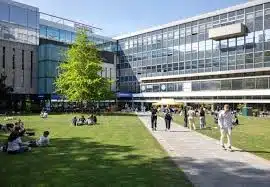
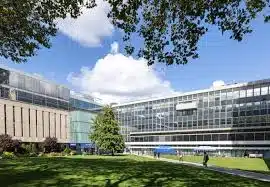
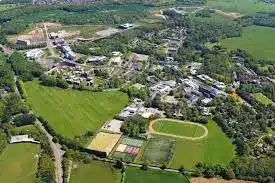
- State-of-the-Art Campuses: The principal campuses of Imperial, including South Kensington, White City, Hammersmith, and Silwood Park, are equipped with the latest learning, research, and innovation infrastructure.
- Modern Learning Spaces: Modern lecture theaters, seminar rooms, and collaborative learning spaces equipped with the latest digital technology to support learning.
- World-Class Research Facilities: Imperial has highly specialized labs, research facilities, and innovation spaces to support advanced research in science, engineering, medicine, business, AI, and sustainability.
- Libraries & Learning Resources: Several libraries are located across the campuses and are well-resourced with extensive print and electronic resources, 24/7 study spaces, research databases, and academic support services.
- Imperial White City Campus: A major innovation and entrepreneurship campus with advanced research labs, business incubators, start-up accelerators, and industry collaboration spaces.
- Medical & Clinical Facilities: Access to world-class teaching hospitals and clinical research facilities, including Imperial College Healthcare NHS Trust, for clinical and translational research.
- High-Performance Computing & IT Infrastructure: Comprehensive IT services, secure online platforms, advanced computing facilities, and high-speed connectivity to support data-intensive research and learning.
- Innovation & Entrepreneurship Infrastructure: Specialized innovation spaces like Imperial Enterprise Lab and technology transfer offices to facilitate start-ups, patents, and commercialization of research.
- Student Accommodation: Various on-campus and off-campus halls of residence offering safe, comfortable, and well-managed living options for students.
- Sports & Recreation Facilities: Extensive sports facilities, fitness suites, swimming pools, sports grounds, and wellness facilities to support a healthy student lifestyle.
- Student Support & Social Spaces: Student hubs, cafes, dining areas, cultural spaces, and the Imperial College Union to provide vibrant social and extracurricular engagement.
- Accessibility & Sustainability: Campuses are designed with accessibility and sustainable infrastructure in mind, reflecting Imperial’s commitment to environmental responsibility.
Official site For Imperial College London: Click Here
Required Documents for Admission in Imperial College London
- Online Application Form – Completed via the Imperial College postgraduate application portal.
- Current Curriculum Vitae (CV)/Resume – Detailing education, work experience, and achievements.
- Personal Statement / Statement of Purpose – Written narrative explaining student motivation, career goals, and reasons for choosing the specific Master’s course.
- Official Academic Transcripts – Full records of all previous degree coursework. If not in English, certified English translations may be required.
- Degree Certificates – Bachelor’s degree certificate or proof of completion (where available).
- References / Letters of Recommendation – Typically two referees (academic and/or professional), with their contacts included in the application.
- English Language Test Results – If applicable (e.g., IELTS, TOEFL) demonstrating English proficiency, unless exempted.
- Quantitative Experience Statement or Other Course-Specific Statements – For some programmes (e.g., business, management), additional written responses may be part of the application.
- Standardized Test Scores (if required) – GRE/GMAT scores for certain programmes (optional for many, but may strengthen an application).
- Application Processing Fee Confirmation – Evidence of payment of the application fee (varies by programme).
Intake For Imperial College London
Primary Intake: September (Autumn intake – main and most common intake for Master’s programmes)
Eligibility Criteria for Master’s Programmes in Imperial College London
- Academic Qualification:
- Applicants must hold a Bachelor’s degree from a recognized university.
- The normal minimum requirement for a Master’s (MSc/MRes/MBA etc.) is a UK Lower Second Class Honours degree, but most programmes normally require a UK Upper Second-Class Honours degree or equivalent.
- Relevant Field of Study:
- The degree should be in a subject appropriate to the intended Master’s programme.
- International Qualifications:
- Imperial accepts a wide range of international bachelor’s degrees as equivalent to UK honours degrees, with specific minimum grades outlined in the official country index.
- English Language Proficiency:
- Applicants whose first language is not English must demonstrate proficiency through approved tests (e.g., IELTS/TOEFL) or meet college-approved English requirements.
- Other Considerations:
- Meeting the minimum academic criteria does not guarantee admission — selection also depends on course suitability, references, personal statement, and, where applicable, relevant work experience.
- Competitive Standards:
- While the baseline is a lower second-class equivalent, many departments give preference to applicants with stronger academic records (e.g., upper second class or first class).
Get more details about the colleges in Kyrgyzstan: Click Here
Admission Process For Imperial College London
- Register & Create Account:
- Start by creating an account on the official My Imperial application portal to begin a postgraduate application.
- Choose the Course:
- Select the Master’s programme(s) which students want to apply for. Applicants may list up to two course choices in one application, with student preferred programmes as first choice.
- Check Entry Requirements:
- Review academic and English language requirements carefully for student chosen course before proceeding.
- Prepare Application Materials:
- Gather all required documents (e.g., transcripts, CV, personal statement, references, English test results).
- Write Personal Statement:
- Submit a well-written personal statement explaining student motivations, academic background, and fit for the programme.
- Submit the Online Application:
- Complete and submit the application through the My Imperial portal, ensuring all sections are filled out accurately.
- Pay Application Fee:
- Pay the required application processing fee (varies by programme; fees may have waivers available).
- Provide References:
- Include details of referees; Imperial will contact them for reference letters once submit an application.
- Interview (if required):
- Some programmes may invite applicants for an interview as part of the admissions decision process.
- Application Review & Decision:
- After submission, the student application is assessed by the Admissions Office and relevant department. students can track progress via My Imperial.
- Receive Offer:
- If successful, students receive an offer letter (conditional or unconditional). Follow the instructions to accept the offer.
- Accept Offer & Next Steps:
- Accept the offer, submit any required documents (e.g., final transcripts), pay any deposits, and begin visa application (for international students).
Also Check:
Gallery








Map View
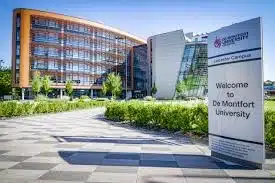
De Montfort University Leicester
De Montfort University Leicester Rich historical setting of the campus and






Lancaster University
Lancaster University Founding and Historical Background The origins of Lancaster University