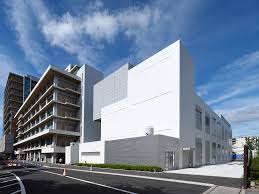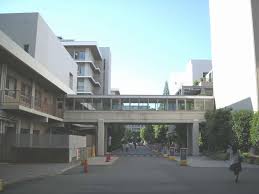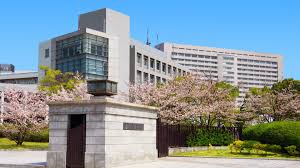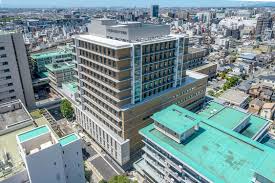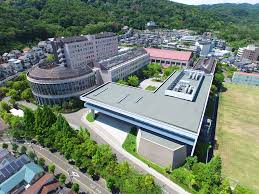
Keio University School of Medicine in Tokyo, established by the visionary Yukichi Fukuzawa, expresses a mission whose focus lies in grooming leaders for all walks of society.
About Keio University School of Medicine Tokyo
The core principle—”University aspire to be leaders of all society”—is an expression of commitment towards developing people who can stand firm on the world stage, critically comprehend the prevailing situations around them and Japan as well, and make positive action towards making their families, communities, country, and the world at large a better place.
Keio University is a dynamic community of students, teachers, staff members, and alumni bound together by a common commitment to personal development, intellectual autonomy, and social engagement.
Keio University School of Medicine Tokyo – Table of Contents
- About
- Advantages
- Ranking
- Departments And Course Duration
- Facilities And Infrastructure
- Fee Structure
- Required Documents
- Eligibility Criteria
- Admission Process
- Benefits
- Privileges And Benefits to Indian Students
- FAQ’s
The university creates an environment in which individuals are motivated to exercise critical thinking, appreciate diversity of viewpoints, and enhance human dignity. This mutual respect and working culture enable genuine friendships to grow, promotes collaborative learning, and develops a high degree of social empathy, ensuring students become responsible and thoughtful members of society.
For its students, Keio University is a transformative space in which lifelong friendships are made and individual development is fostered through what the university terms a “virtuous cycle of life.”

Keio University School of Medicine Tokyo Accreditations, Affiliations, Recognitions
Academic programs at Keio press students to probe deeply into the fundamentals of society and science, while extracurricular activities in sports, the arts, culture, social service, and welfare expand their horizons and shape their humanity. Through its diverse international programs, students acquire global exposure, learning to value their own advantages while keeping humility and a sense of obligation to make a valuable contribution to society.
The teaching staff at Keio University are world-class scholars with lofty ideals who are dedicated to promoting knowledge through education, research, and healthcare. Alongside students, they venture into the frontiers of medicine and science, imagining the future landscapes of society—10, 20, 30, or 50 years hence—and nurturing the conditions under which these futures are developed.
Outside the classroom, faculty and staff are actively involved with global thought leaders in areas like human rights, food security, environmental sustainability, and public safety, affirming the university’s influence on society writ large.
Keio alumni hold prominent positions around the world, serving not only traditional corporations and start-ups, but also non-profit and social organizations that are forging society of the future.
The robust alumni network offers students unmatched opportunities for mentoring, collaboration, and professional development, both in their university years and beyond into their professional lives. By linking students to a worldwide network of successful leaders, Keio University guarantees its alumni have the knowledge, skills, and values necessary to create a lasting positive impact on society.
Advantages of Studying in Keio University School of Medicine Tokyo
Advanced Research:
Keio University School of Medicine is at the forefront of both education and research, providing access to cutting-edge facilities and resources that drive innovation and sophisticated medical studies.
Innovation Focus:
Advanced centers, like CRIK Shinanomachi, provide centers of excellence for innovative research, driving milestones in medical science and healthcare.
Unique Medical Network:
The university offers a strong and unique medical network with diverse career opportunities and practical training in clinical and research environments.
Career & Employability
Excellent Graduate Employability:
Keio University graduates are well-received by employers, especially in medicine, law, and accounting, due to the university’s intensive training and practice-based learning process.
Strong Alumni Network:
A large and powerful alumni network offers priceless career connections and opportunities, both in and outside of Japan, to support career development.
Student Life & Environment
Dynamic Urban Experience:
The dynamic urban campus experience in Tokyo offers a unique blend of scholarly pursuits with exposure to international points of view and opportunity.
Supportive Learning Environment:
Keio has extensive student support programs, such as scholarships, housing support, and career guidance, so that students may excel academically and as individuals.
Rich Campus Life:
Extensive extracurricular clubs, cultural events, and activities enable students to explore their passions, form deep connections, and cultivate leadership and collaboration abilities.
Reputation & History
Historic Private Institution:
Being one of Japan’s oldest and most prestigious private universities, Keio blends a rich historical heritage with a contemporary, progressive philosophy of education and research.
Prestigious Rankings:
Keio University is consistently ranked top in national and international rankings, demonstrating its academic achievement, research productivity, and high graduate employability.
Latest Notifications:
Keio University School of Medicine – Ranking
Keio University School of Medicine in Tokyo traces its history to 1858 when a school to learn Western affairs was established by Yukichi Fukuzawa in Edo. Through the years of more than 160 years, Keio University has grown to be one of Japan’s most renowned and oldest comprehensive universities.
Today, it has an integrated educational system from elementary school to university and graduate schools, raising generations of fine people who have made significant contributions in a wide range of fields.
Taking up Fukuzawa’s visionary purposes, Keio University continues to stress learning, particularly what he referred to as “practical learning.” Against a narrow reading, Fukuzawa’s practical learning does not refer merely to the acquisition of skills of immediate practicality. Rather, it is the scientific spirit—the empiric quest for truth and systematic assault on wide-ranging problems. This spirit of disciplined intellectual inquiry and problem-solving has been a hallmark of Keio University’s educational tradition and is well rooted in all of its school programs, including the School of Medicine.
Since its establishment in 1951, the Graduate School of Letters at Keio has continued to expand and evolve with the changing needs of society while remaining committed to its original emphasis on intellectual discipline and critical thinking.
The university now has a broad range of majors, from Philosophy and Ethics, Aesthetics and Arts Science (with studies of Art Management), History (Japanese, Asian, and Western history, Archaeology and Ethnology), Japanese Literature (Education in the Japanese Language), Chinese Literature, English and American Literature, German Literature, French Literature, and Library and Information Science (Information Resource Management).
With this highly diversified range of areas of study, the Graduate School of Letters forms a wide study environment that cultivates depth of study as well as width of vision, allowing students to make significant contributions to society and the global community.
Departments And Course Duration in Keio University School of Medicine
Departments / Divisions:
The School of Medicine at Keio University is organized into specialized departments that cover all major areas of medical science and clinical practice. Students gain comprehensive exposure to both fundamental and applied medical disciplines.
- Department of Anatomy – Study of human structure and morphology, with cadaveric dissections and imaging-based learning.
- Department of Physiology – Understanding body functions, mechanisms, and physiological processes.
- Department of Biochemistry & Molecular Biology – Exploring biochemical pathways, molecular mechanisms, and clinical correlations.
- Department of Pathology – Investigation of disease mechanisms, histopathology, and diagnostic techniques.
- Department of Pharmacology – Study of drug actions, pharmacokinetics, and therapeutics.
- Department of Microbiology & Immunology – Understanding infectious agents, host defenses, and immunological principles.
- Department of Internal Medicine – Clinical training in cardiology, gastroenterology, endocrinology, nephrology, and other internal medicine specialties.
- Department of Surgery – Surgical techniques, perioperative care, and specialty surgery exposure (orthopedics, neurosurgery, cardiovascular surgery, etc.).
- Department of Pediatrics – Diagnosis and treatment of child health conditions.
- Department of Obstetrics & Gynecology – Maternal health, reproductive medicine, and prenatal care.
- Department of Psychiatry & Behavioral Sciences – Mental health, psychiatric disorders, and therapy approaches.
- Department of Radiology & Medical Imaging – Imaging techniques, diagnostics, and interventional procedures.
- Department of Emergency Medicine & Critical Care – Acute care, trauma management, and life-saving interventions.
- Other Specialized Departments – Including anesthesiology, dermatology, ophthalmology, otolaryngology, and rehabilitation medicine.
Course Duration:
- The MBBS program (equivalent to the Japanese medical degree) at Keio University generally spans 6 years, divided into:
- Pre-clinical Years (1st–2nd year): Foundation courses in basic medical sciences, anatomy, physiology, biochemistry, and early clinical exposure.
- Clinical Years (3rd–6th year): Rotations in major clinical departments, hands-on patient care, hospital training, research opportunities, and preparation for licensing examinations.
Highlights:
- Strong integration of research and clinical practice, giving students opportunities to participate in innovative medical research.
- Access to world-class hospitals and specialized medical centers for practical learning.
- Emphasis on global medical perspectives, preparing students for careers in Japan and internationally.
Latest Updates:
Facilities And Infrastructure in Keio University School of Medicine
Keio University School of Medicine – Facilities & Infrastructure
State-of-the-Art Campus:
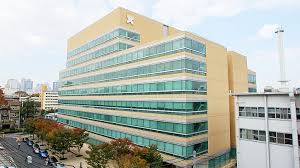
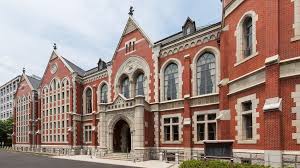
Keio University School of Medicine provides a contemporary, well-equipped campus that is geared towards facilitating advanced medical education, research, and clinical training. The infrastructure supports classrooms, laboratories, and hospitals perfectly, allowing students to experience an environment that is favorable for learning and innovation.
Advanced Laboratories & Research Centers
CRIK Shinanomachi (Center for Research and Innovation in Health Care): A center of innovative medical research, promoting interactivity among scientists, doctors, and students.
Sophisticated laboratories for biochemistry, molecular biology, microbiology, pharmacology, and physiology, with state-of-the-art equipment for experimentation and analysis.
Simulation laboratories for training in clinical skills, where students can practice procedures on mannequins and animals before working on patients.
Clinical Training Facilities:
Keio University Hospital: A global-standard teaching hospital where students gain hands-on clinical experience in all major medical specializations.
Specialty units in cardiology, neurology, oncology, pediatrics, surgery, and emergency medicine, exposing students to cutting-edge diagnostics and treatment techniques.
Access to up-to-date medical imaging, laboratory diagnostics, and surgical equipment to support theoretical education.
Libraries & Learning Resources:
Comprehensive medical libraries with access to textbooks, journals, and online databases.
Online learning platforms and resources to facilitate self-study, research, and evidence-based medical practice.
Student Amenities & Campus Life:
Comfortable hostels and residential facilities for international and domestic students.
Recreational spaces, cafeterias, and wellness centers to enhance a healthy student lifestyle.
Diverse clubs, societies, and cultural activities to promote holistic development beyond academics.
Technology-Enhanced Education:
Smart classrooms, lecture theatres, and audiovisual equipment to enable interactive learning.
Access to telemedicine, computerized patient records, and other IT-enabled instruments of advanced medical education.
Global Exchange & Collaboration:
Collaboration with top-ranked global medical schools, facilitating student exchange, collaborative research, and international exposure.
Access to attend international conferences, seminars, and collaborative research initiatives.
Official site For Keio University School of Medicine: Click Here
Keio University School of Medicine Fee Structure
Approximately fee structure will be 60 lakhs to 70 lakhs.
Required Documents For Admission in Keio University School of Medicine
Academic transcripts from higher secondary school
Passport-sized photos and a valid passport
Language proficiency proof (JLPT / TOEFL / IELTS)
Letters of recommendation (If required).
Statement of Purpose (SOP)
Financial proof of ability to pay tuition and living expenses
Health check-up and vaccination records
Eligibility Criteria For Admission in Keio University School of Medicine
- Academic Qualification – Class 12 with Physics, Chemistry, Biology
- Minimum Marks – At least 70% in PCB subjects
- Entrance Exam – NEET (for Indian students)
- Language Requirement – JLPT (Japanese Language Proficiency Test) N2/N1 or TOEFL/IELTS if applying for English-medium programs
- Age Limit – Should cross 17+
- Valid Passport
Admission Process For Keio University School of Medicine
- Research Universities: Find the top medical colleges in Japan and check if they offer MBBS in English or Japanese.
- Prepare Documents: Collect all required academic and personal documents.
- Submit Application: Apply online through the university portal or via Japanese embassies.
- Entrance Exams: universities may require a written test or interview (if Necessary)
- Application Fee: Complete payment as part of the process.
- Get Acceptance Letter: If selected, you’ll receive an admission letter needed for the student visa.
Get more details about the colleges in Kyrgyzstan: Click Here
Benefits of Studying at Keio University School of Medicine, Tokyo
1. International Standards of Education and Research
Keio University is a world-class institution in education and research in medicine, and students have the privilege of access to state-of-the-art laboratories, cutting-edge classrooms, and advanced medical technology.
Students have opportunities to be involved in pioneering research in places like CRIK Shinanomachi that boost scientific problem-solving and creativity abilities.
2. Extensive Clinical Exposure
The university’s affiliated hospitals, like Keio University Hospital, offer in-depth hands-on clinical practice in many specialties and prepare the students for a variety of careers in medicine.
Early exposure is made to patient care and modern healthcare practice through a combination of theory and practice.
3. Strong Career Opportunities and Alumni Network
Keio University graduates are highly sought after in Japan and overseas, and enjoy excellent career opportunities in medicine, research, and healthcare executive positions.
The extensive alumni network provides mentorship, professional networks, and career opportunities throughout the students’ lifetime.
4. Reputation and Tradition
Established over 160 years ago, Keio University is one of Japan’s oldest and highest-ranking private universities, with tradition combined with cutting-edge education and medical procedures.
The university’s high national and global rankings speak to its scholarly rigor, research, and excellent reputation among physicians.
5. Focus on Scientific and Practical Learning
In line with Yukichi Fukuzawa’s concept of “practical learning,” Keio puts tremendous emphasis on experiential, science-based approaches to medical education.
Through learning, students are enabled to analyze, think critically, and apply medical knowledge in the real practice of healthcare.
Privileges And Benefits to Indian Students at Keio University School of Medicine, Tokyo
1. Internationally Accepted Medical Degree:
Indian students receive a Japanese medical degree that has worldwide acceptance and opens up avenues for postgraduate education and medical practice on the global stage, including becoming eligible to sit for the Medical Council of India (NMC) screening test if they intend to practice in India.
2. Quality of Education & Research Opportunities.
Access to world-class teachers, state-of-the-art laboratories, and sophisticated medical equipment, enabling Indian students to acquire robust theoretical foundation and practical clinical exposure.
Chance to engage in cutting-edge research pursuits at facilities such as CRIK Shinanomachi, promoting acquaintance with global standards of medical practice.
3. Robust Career & Alumni Support
Graduates are able to take advantage of the elite reputation and strong alumni network of Keio, which is able to offer mentorship, internships, and job opportunities in Japan and internationally.
Indian students are able to tap into this network for professional development and global collaboration.
4. Global Supportive Environment.
Specialized support services for international students, such as admissions counseling, housing support, language assistance, and counseling, facilitate seamless integration into Japanese life.
Opportunities for joining international programs and exchange schemes to enhance cultural knowledge and global medical views.
5. Exposure to Japanese Healthcare System:
Indian students have firsthand experience of Japan’s world-class healthcare system and learn about contemporary medical practices, patient care methods, and hospital administration.
This experience is beneficial to those who intend to work overseas or introduce innovative practices to Indian healthcare.
6. Lively Student Life:
Students have a rich cultural life on campus, with clubs, societies, cultural events, and sports, which foster well-rounded development and genuine friendships.
FAQ’s
What is the tuition fee for international students?
Tuition varies each year. Typically, it is higher for international students than for domestic students. Fees should be confirmed on the official university website or through the admissions office.
What is the campus life like for international students?
International students can participate in student clubs, cultural activities, and campus events. Support services for international students include counseling, language assistance, and orientation programs.
Are there dormitories for international students?
Yes, Keio University provides accommodation options, including international dormitories and student housing, though availability may be limited.
What is the duration of the medical program?
The MD program at Keio University School of Medicine typically lasts 6 years, including both pre-clinical and clinical training.
What is the tuition fee for international students?
Tuition varies each year. Typically, it is higher for international students than for domestic students. Fees should be confirmed on the official university website or through the admissions office.
What is the campus life like for international students?
International students can participate in student clubs, cultural activities, and campus events. Support services for international students include counseling, language assistance, and orientation programs.
Also Check:
Gallery





Map View
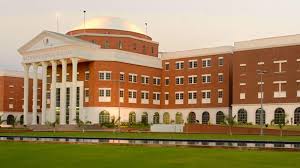
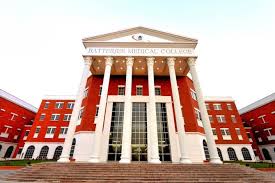
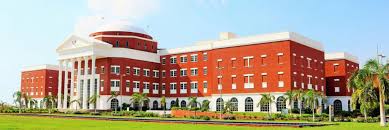
Batterjee Medical College for Sciences and Technology
Batterjee Medical College for Sciences and Technology Jeddah Batterjee Medical College
Kansai Medical University School of Medicine
Kansai Medical University School of Medicine, Moriguchi Kansai Medical University was
Kurume University School of Medicine
Kurume University School of Medicine – Kurume The Kurume University is
Osaka Medical and Pharmaceutical University Faculty of Medicine Takatsuki
Osaka Medical and Pharmaceutical University Faculty of Medicine Takatsuki Osaka Medical